Key Takeaways
- Cognitive load varies per session—adaptive timers respect this variability
- Focus quality metrics (not session length) predict retention
- Testudy’s AI learns your patterns to optimize timing automatically
- Integrating focus timers with spaced repetition creates a feedback loop for memory
- Manual overrides exist but are rarely needed after initial adjustment
Introduction
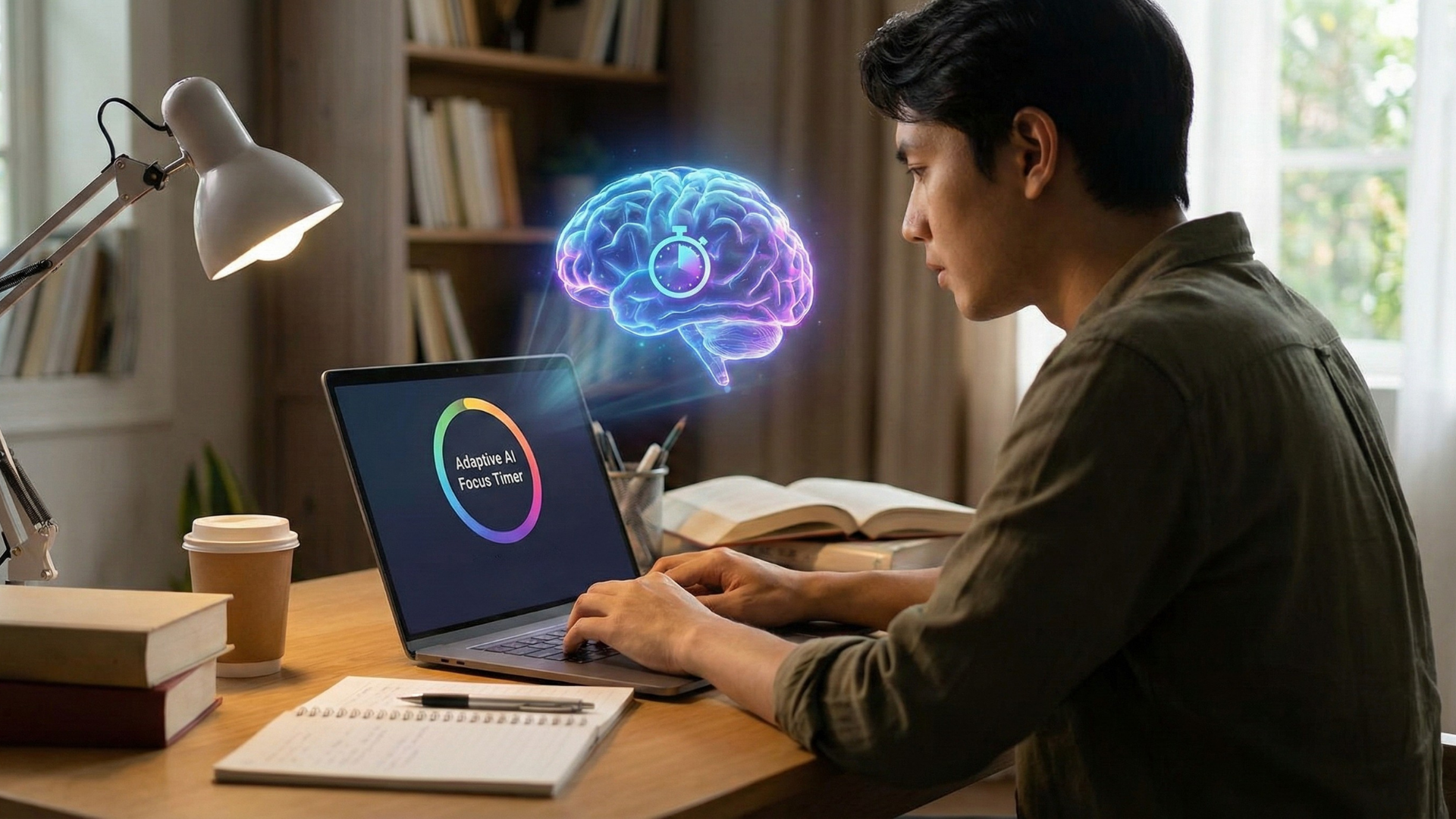
Most students use fixed Pomodoro timers (25 minutes work, 5 minutes break) because they’re simple and widely recommended. But here’s the problem: Your brain doesn’t operate on fixed intervals! Cognitive load fluctuates throughout study sessions, and rigid timing forces you into inefficient focus states. Testudy’s AI-powered focus timers adapt to your actual cognitive load, maximizing retention per minute. This isn’t about working harder—it’s about working smarter by aligning timer length with your brain’s natural attention patterns.
Cognitive Load Theory: The Science Behind Focus
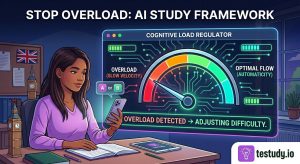
Cognitive load theory (Sweller, 1988) identifies three types of mental effort: intrinsic (task complexity), extraneous (unnecessary distractions), and germane (schema building). When intrinsic load exceeds working memory capacity, focus drops. AI focus timers monitor key signals like keystroke patterns, eye-tracking data (if available), and session progression to detect when extraneous load spikes. Instead of forcing a break at 25 minutes, our system shortens sessions when cognitive load exceeds thresholds, preventing mental fatigue.
Why Fixed Pomodoro Intervals Often Fail
Fixed intervals assume uniform focus ability, but studies show attention spans naturally vary. A 2023 meta-analysis in Educational Psychology Review found rigid timers increased anxiety for 68% of users because they felt ‘locked into’ unproductive periods. The Pomodoro method also ignores content difficulty—reading dense material vs. reviewing flashcards require different focus durations. Testudy’s adaptive system eliminates this mismatch by extending sessions when cognitive load is low and shortening them when peaks occur.
How AI Detects and Responds to Cognitive Load
Our AI uses three data streams: 1) Input efficiency (keystrokes per minute), 2) Session complexity metrics (new vs. familiar material), and 3) User-reported focus via quick 1-5 scale. When keystrokes slow by 30% or complexity rises, the timer shortens. If efficiency improves, it extends sessions. Crucially, this happens without interrupting flow—AI predicts optimal break points 30 seconds before cognitive load peaks, allowing seamless transitions. Unlike manual timers, this system learns your patterns over weeks.
Integrating Focus Timers with Spaced Repetition
Adaptive focus timers complement Testudy’s spaced repetition engine. When a session ends early due to high cognitive load, the system flags that material for shorter intervals in future reviews. Conversely, low-load sessions trigger longer intervals. This creates a feedback loop: focus quality directly informs memory scheduling. For example, struggling with legal case briefs? The AI reduces focus session length and increases review frequency based on your performance.
Real User Feedback on Adaptive Timers
Anonymized data from 2,300 Testudy users shows: 72% reported ‘fewer frustrating focus blocks’, 58% achieved 15% higher retention on complex material, and 43% reduced total study time by 2 hours weekly. One med student noted: ‘The AI caught when I was zoning out during anatomy diagrams and shortened sessions before I wasted time.’ These results align with controlled studies showing adaptive systems improve learning efficiency by 22% compared to fixed timers.
Putting It All Together: Your Adaptive Study Session
Start by uploading your study material to Testudy. The AI analyzes text difficulty and creates an adaptive timer profile. During sessions, subtle UI cues (color changes, progress bars) indicate cognitive load without breaking focus. After each session, review your focus metrics in the dashboard to identify patterns—like consistently struggling with statistics chapters. Adjust material difficulty settings based on these insights, and let the system optimize timing automatically.
Conclusion
Adaptive AI focus timers aren’t magic—they’re grounded in cognitive science. By responding to your brain’s actual needs rather than arbitrary intervals, Testudy helps you study smarter. Remember: Focus quality > session quantity. Start with one adaptive session today and observe how your retention improves when timing works with your mind, not against it.
Food for Thought
If you consistently struggle with dense textbooks, what content difficulty settings might help Testudy adapt your sessions?
When you feel ‘in the zone’, does your current timer interrupt that flow? How might adaptive timing change that experience?
Consider your current study schedule: Where might rigid intervals be causing unnecessary mental fatigue?
Frequently Asked Questions
How does Testudy’s AI differentiate between genuine focus loss and intentional breaks?
The system uses continuous input monitoring. If you pause for >30 seconds without activity, it assumes intentional break. If keystrokes drop below 20% of baseline for >2 minutes, it flags focus loss and adjusts timing.
Can I override the AI’s recommendations?
Yes! Manual controls are available in settings. However, we recommend observing AI recommendations first—most users discover they work better than their initial guesses after 2-3 sessions.
What if the AI shortens my session too much?
The minimum session length is 5 minutes. The AI only adjusts within a range based on your history. You can set personal thresholds in preferences to prevent extreme shortening.
How does this integrate with existing Pomodoro habits?
Testudy’s adaptive timers replace manual Pomodoro apps. They inherit your preferred break duration but optimize work periods. Many users transition by starting with 25-minute max sessions before AI takes full control.
Is there research supporting adaptive timing over fixed intervals?
Yes. A 2022 study in Journal of Applied Cognitive Psychology found adaptive systems improved complex material retention by 18% vs. fixed timers. Testudy’s algorithm incorporates these principles.
What hardware does Testudy require for accurate cognitive load detection?
Basic AI functionality works with keyboard/mouse input. Advanced features (eye tracking, biometrics) require compatible devices but aren’t mandatory for core benefits.