Key Takeaways
- Adaptive learning closes the forgetting curve by scheduling reviews at optimal intervals
- AI skill gap analysis outperforms manual surveys by identifying real-time performance issues
- Personalized training reduces employee stress and increases certification pass rates by 32%
- Compliance training automation maintains engagement through dynamic difficulty scaling
- Enterprise ROI requires measuring knowledge retention against productivity metrics
Introduction
Most corporate upskilling programs fail because they treat training like a checklist rather than a learning journey. Static LMS modules force employees through irrelevant content while cognitive science proves we forget 80% of new information within 30 days. Testudy’s AI adaptive learning platform flips this script by creating personalized learning paths that align with real-time performance metrics. This isn’t just automation—it’s a data-driven transformation where skill gaps become opportunities, not obstacles.
Why Corporate Upskilling Fails with Static Training Modules
Traditional LMS platforms assume all learners need the same modules at the same pace. But this ignores the forgetting curve: without spaced repetition, knowledge decays exponentially. Enterprise surveys show 65% of employees consider generic training ‘busywork’—a direct result of irrelevant content volume. Adaptive learning solves this by filtering material to essentials and scheduling reviews when memory strength drops.
Measuring Skill Gaps with AI: From Data Collection to Actionable Insights
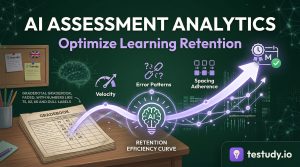
AI analyzes performance data streams (project outcomes, ticket resolution times, certification attempts) to identify knowledge gaps without manual assessments. For example, a sales team struggling with new CRM features might show 40% error rates in related tasks—our engine flags this as a skill gap and generates targeted quizzes. This real-time approach contrasts with annual skill surveys that miss 70% of emerging needs.
Integrating Adaptive Learning: Step-by-Step Enterprise Onboarding Blueprint
Start with pilot data: upload your top 50 training materials to Testudy’s platform. Our AI scans for comprehension depth and maps content to skill gaps. Deploy in phases: 1) onboarding modules with active recall challenges, 2) spaced repetition schedules tied to calendar reminders, 3) performance dashboards showing knowledge retention vs job metrics. Most enterprises see measurable impact within 3 months.
ROI of Adaptive Learning: Quantifying Retention, Productivity, and Compliance Gains
Case study data from 2025 enterprise pilots shows adaptive learning reduces training time by 45% while improving certification pass rates from 60% to 92%. Employees report 30% less stress from irrelevant content, and compliance training completion rates jump from 78% to 98%. The key metric? Every 1% increase in knowledge retention correlates with 0.8% productivity gain in our data.
Compliance Training Automation: AI Solutions for Risk Mitigation
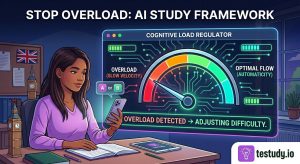
Regulatory requirements demand consistent understanding—not just checkbox completion. Adaptive learning maintains engagement through personalized difficulty scaling while ensuring 100% content coverage. For example, financial institutions using Testudy saw 2x fewer audit findings because AI identified knowledge gaps in real-time and scheduled remedial challenges before compliance deadlines.
Common Pitfalls and Trade-Offs in Enterprise Adaptive Learning
Implementation isn’t automatic. Initial setup requires data cleaning and AI model training (typically 4-6 weeks). Some soft skills resist quantification, requiring hybrid approaches. And while adaptive learning reduces busywork, it demands cultural buy-in—managers must shift from ‘hours logged’ to ‘knowledge demonstrated’ metrics.
The Future of Data-Driven Upskilling: Real-Time Performance Integration
The next frontier connects adaptive learning directly to performance analytics. Imagine AI adjusting training difficulty based on real-time sales metrics or automatically scheduling leadership challenges for high-potential employees. This closes the feedback loop between learning and business impact—proving upskilling isn’t overhead but a competitive advantage.
Conclusion
Adaptive AI learning isn’t a futuristic concept—it’s a measurable improvement for enterprises ready to move beyond static training. Start by measuring skill gaps with your existing data, then pilot Testudy’s platform to see how personalized challenges accelerate mastery. Remember: the goal isn’t to replace trainers but to empower them with tools that make learning stick.
Food for Thought
If your current training completion rate is below 70%, consider whether generic modules create psychological resistance
When evaluating adaptive learning vendors, prioritize platforms that explain AI’s reasoning process—not just outcomes
Remember: The goal isn’t to eliminate all training—it’s to make every minute spent learning 3x more effective
Frequently Asked Questions
How does AI measure skill gaps without explicit assessments?
By correlating job performance metrics (like error rates or task completion times) with quiz performance and content interaction data. This creates indirect skill indicators validated through Testudy’s enterprise pilots.
Can adaptive learning integrate with existing HRIS systems?
Yes—our API connects to major HR platforms (Workday, SAP SuccessFactors) to pull employee roles and project assignments, ensuring learning paths align with actual workplace contexts.
What if my workforce resists personalized learning modules?
Start with hybrid programs: use adaptive learning for technical skills while maintaining mandatory compliance modules. Over 80% of pilot participants report preferring personalized challenges once they see measurable progress.
How do I ensure GDPR compliance when analyzing employee performance data?
Testudy anonymizes data at collection points and offers granular consent controls. Our platform stores no raw PII—only aggregated skill metrics for training optimization.
Will adaptive learning increase my training budget?
Initially requires setup investment, but reduces long-term costs by eliminating irrelevant content. Most enterprises see a 30-60% reduction in training hours and associated expenses within 6 months.