Key Takeaways
- AI manages retrieval practice and scheduling; human coaching manages conceptual synthesis and strategic adaptation.
- Treat AI-generated quizzes as draft material. Always verify accuracy and alignment before using them for serious review.
- Share performance patterns with mentors, not just raw scores, to maximize coaching efficiency.
- Hybrid learning reduces study time by eliminating passive review and focusing effort on genuine knowledge gaps.
- Sustainable mastery comes from iterative calibration, not perfection in early practice cycles.
Introduction
Studying for high-stakes exams has always required a balance between disciplined practice and strategic guidance. Recently, artificial intelligence has entered the equation, promising to generate endless quizzes, optimize review schedules, and eliminate the guesswork from active recall. The technology delivers on its basic promise, but learners quickly encounter a familiar roadblock: they can memorize answers efficiently yet still struggle to apply concepts under pressure. This is not a failure of the tools. It is a mismatch in how they are deployed. AI excels at repetition, but human coaching provides the contextual framing that turns isolated facts into adaptable knowledge. When combined deliberately, these two forces create a feedback loop that accelerates mastery while reducing burnout. This guide walks through exactly how to design, integrate, and measure a hybrid study methodology so you can study with precision, retain what matters, and walk into exams with clarity rather than anxiety.
Why AI Alone Falls Short of True Mastery
Artificial intelligence has dramatically lowered the barrier to practice material. Upload a textbook, paste lecture notes, and within minutes you receive structured quizzes. The efficiency is undeniable. Yet learners who rely exclusively on AI-generated drills often plateau. The reason lies in how AI processes information. Large language models predict probable answers based on patterns in training data, but they do not inherently understand the hierarchical relationships between concepts or the specific reasoning pathways required by exam boards. Without external calibration, AI quizzes can reinforce surface-level recognition while leaving deeper comprehension untouched. Another limitation is metacognition. AI can tell you what you missed, but it cannot accurately diagnose why you missed it. A flawed assumption, misread terminology, or rushed calculation requires human intervention to untangle. When learners treat AI as a standalone tutor, they risk developing a false sense of security. You may score highly on practice sets, but exam conditions introduce novel phrasing and integrated problem-solving that expose gaps in conceptual flexibility. Recognizing this boundary is the first step toward building a system that compensates for it.
The Synergy of AI Practice and Human Mentorship
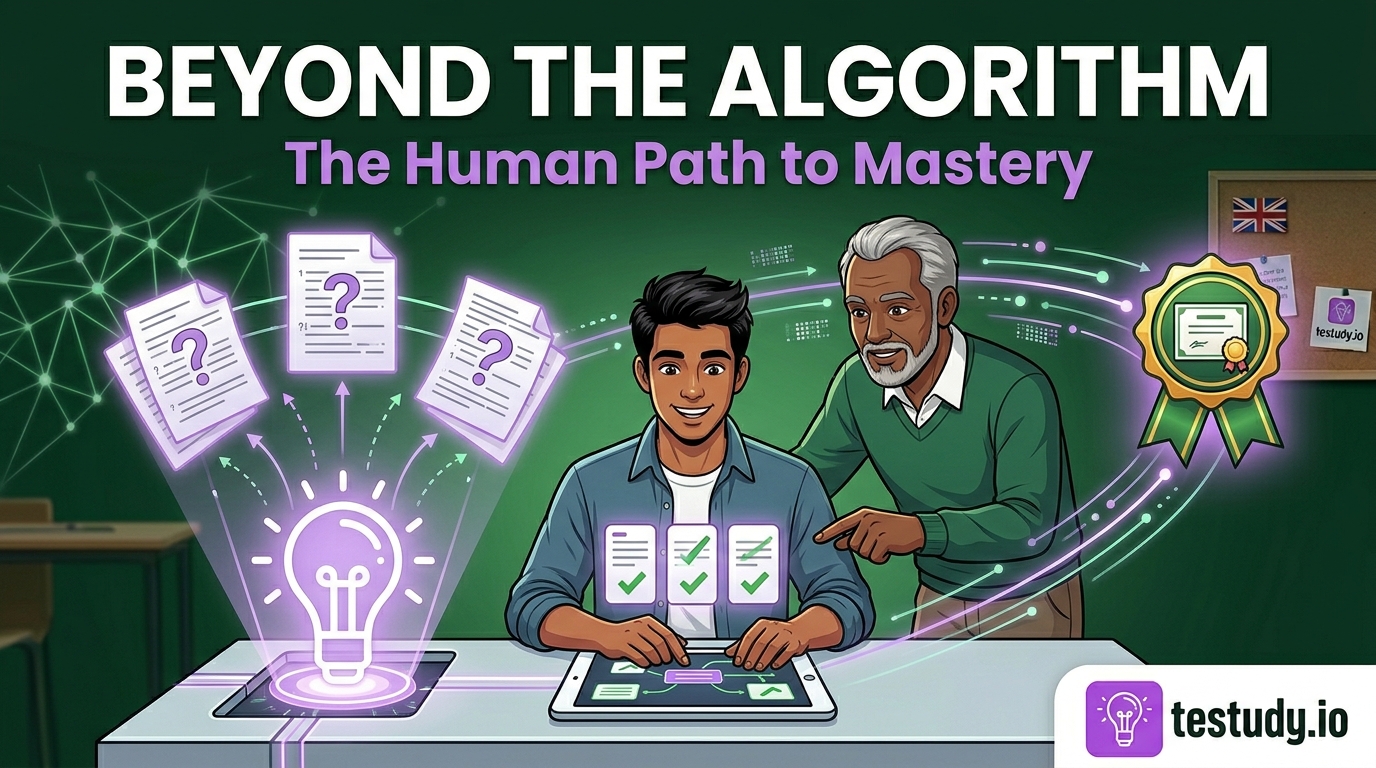
Effective hybrid study methodologies do not split responsibilities randomly. They assign tasks based on comparative advantage. AI handles the heavy lifting of retrieval practice, spaced repetition scheduling, and baseline knowledge testing. It ensures you encounter material at optimal intervals, preventing the rapid decay that typically follows passive reading. Human coaching, on the other hand, manages cognitive load management, conceptual synthesis, and strategic adaptation. Tutors and mentors help you connect disparate topics, identify recurring exam traps, and adjust study intensity when life circumstances or curriculum shifts demand it. This division creates a dynamic ecosystem. AI generates the data, humans interpret the patterns. You practice independently with algorithmically optimized quizzes, then bring targeted questions to coaching sessions instead of starting from scratch. The result is a compounding effect: AI reduces the time spent on redundant review, freeing coaching time for high-impact conceptual work. Learners stop asking, what should I study next? and start asking, how do I approach this complex problem efficiently? That shift in questioning is where genuine mastery begins.
Designing AI-Generated Quizzes for Tutor Review
The quality of your hybrid system depends entirely on how carefully you structure AI outputs before they reach human review. Raw AI generation often includes ambiguous questions, overly broad answer choices, or subtle inaccuracies that can misdirect study efforts. To prevent this, treat AI as a drafting tool rather than a final product. Begin by feeding it clearly segmented study materials. Instead of uploading an entire textbook, provide focused chapters, annotated lecture slides, or specific clinical guidelines. This reduces hallucination and keeps the output tightly aligned with your curriculum. Next, apply explicit filtering criteria. Request single-choice questions that test application over definition, and multiple-choice formats that include plausible distractors based on common student errors. Once generated, conduct a rapid quality scan. Flag questions where the rationale feels circular, where terminology deviates from your course materials, or where the difficulty level does not match exam standards. This curated batch is what you bring to your tutor or study group. Human review should focus on three elements: accuracy verification, alignment with learning objectives, and identification of hidden conceptual traps. When AI outputs are treated as draft material rather than finished assessments, they become powerful catalysts for expert-guided learning rather than sources of confusion.
Best Practices for Integrating AI Insights into Coaching Sessions
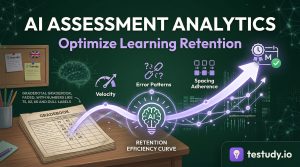
Data without direction is noise. AI platforms generate performance metrics, but those numbers only become useful when translated into actionable study adjustments. The most effective coaching sessions begin with a brief performance review. Instead of recounting every wrong answer, look for patterns. Are you consistently missing questions that require multi-step reasoning? Do errors cluster around specific topics, or do they appear randomly under time pressure? Share these trends with your tutor before the session begins. This allows the mentor to prepare targeted explanations rather than improvising. During the session, shift focus from correction to calibration. Discuss why certain distractors felt convincing, how to recognize question stems that signal specific cognitive processes, and what mental models you can apply to unfamiliar scenarios. Adjust your spaced repetition schedule based on these insights. If a concept requires deeper restructuring, manually extend the review intervals and request additional scenario-based practice from the AI. Conversely, if performance stabilizes, compress the schedule to free up time for emerging topics. This iterative loop ensures that coaching remains forward-looking and that AI practice continuously aligns with your evolving understanding. The goal is not to chase perfect quiz scores, but to build resilient problem-solving habits that transfer to exam day.
Real-World Impact: How Blended Learning Improves Exam Performance
The measurable benefits of hybrid methodologies emerge when efficiency meets depth. Students and professionals who integrate AI-generated practice with structured human coaching consistently report reduced study time, higher retention rates, and improved scores on high-stakes assessments. The mechanism is straightforward but often overlooked. Traditional studying wastes hours on material you already know or on passive rereading that creates illusionary competence. AI eliminates that waste by forcing active retrieval and spacing reviews strategically. Human coaching prevents the other common failure mode: drilling without comprehension. When learners combine both, they spend less time guessing what to study and more time strengthening weak neural pathways through targeted intervention. In academic settings, this translates to smoother preparation cycles and fewer last-minute cramming sessions. For certification candidates, it means navigating complex question formats with calibrated confidence rather than memorized scripts. The impact extends beyond scores. Learners develop stronger metacognitive awareness, recognizing early when their understanding is superficial and knowing exactly which resource to deploy for correction. This self-regulation is the hallmark of sustainable academic and professional growth.
Building Your Own Adaptive Study Ecosystem
Implementing a hybrid methodology does not require complex software or extensive training. It requires intentional sequencing. Start by selecting a reliable AI quiz generator that supports custom uploads and spaced repetition tracking. Feed it focused, verified study material and generate practice sets in manageable batches. Review the outputs critically, discarding ambiguous or misaligned questions before scheduling your practice sessions. Establish a regular cadence with your tutor or mentor, even if it is biweekly. Share your performance analytics in advance and structure sessions around pattern recognition, conceptual clarification, and exam strategy. After each coaching interaction, update your AI settings to reflect new priorities. If a tutor highlights a recurring reasoning error, prompt the AI to generate scenario-based questions targeting that specific gap. Track your progress not by raw accuracy percentages, but by reduction in review time and increased comfort with unfamiliar question formats. Expect friction during the first few weeks as you calibrate the system. That is normal. Refine your prompts, adjust scheduling intervals, and communicate clearly with your human coach about what is working. Over time, the process becomes self-correcting, and your study routine shifts from reactive stress management to proactive mastery building.
Conclusion
Mastering complex material is rarely about finding a single perfect tool. It is about constructing a reliable workflow that leverages technology for efficiency while preserving human insight for depth. AI-generated quizzes remove the friction of material creation and keep your review schedule aligned with cognitive science. Human coaching ensures that the knowledge you retain is flexible, contextualized, and exam-ready. When these elements operate in tandem, studying becomes less about surviving volume and more about understanding structure. You will still encounter difficult concepts and unexpected question formats, but you will have a system designed to address them methodically. Start small, track what shifts, and adjust deliberately. The goal is not to study longer, but to study with precision. Over time, that precision compounds into quiet confidence, the kind that carries you through exams without panic and leaves room for genuine intellectual growth.
Food for Thought
When you review your recent practice results, are you noticing isolated mistakes or recurring reasoning patterns? Identifying the trend tells you where to focus next.
If your current study routine leaves you feeling exhausted rather than informed, which part could be handed off to automation, and which part genuinely requires human guidance?
Consider the last time you felt unprepared despite logging study hours. Was the gap in material coverage, or in how the material was tested and explained?
Frequently Asked Questions
Can AI-generated quizzes replace human tutoring entirely?
AI excels at generating practice material and scheduling reviews, but it cannot diagnose flawed reasoning, adapt to nuanced curriculum shifts, or provide the motivational calibration that human mentors offer. AI handles volume and repetition; humans handle context and strategy. The most effective learners use both.
How do I know if an AI-generated question is accurate?
Cross-reference the question stem and answer rationale with your primary course materials, textbooks, or official guidelines. If the wording feels ambiguous, the distractors are implausible, or the explanation relies on circular logic, flag it for human review or discard it. AI is a drafting engine, not a final authority.
What should I bring to a coaching session when using AI practice data?
Focus on patterns rather than isolated mistakes. Share which question types consistently challenge you, where you feel confident but still score low, and any recurring terminology confusion. This allows your mentor to address underlying conceptual gaps instead of reviewing every incorrect answer.
Will relying on AI quizzes make me overconfident before exams?
Overconfidence typically stems from practicing on poorly calibrated or overly familiar material. If you use AI outputs without human verification, you may memorize specific phrasing rather than mastering concepts. Combining AI drills with tutor-led scenario practice and unfamiliar question formats keeps calibration realistic.
How often should I adjust my spaced repetition schedule?
Review your retention metrics weekly. If you consistently score above eighty percent on a topic, extend the interval to prevent wasted repetition. If accuracy drops or concepts feel fragmented, shorten the interval and request targeted practice. Adjustments should reflect actual recall difficulty, not arbitrary timelines.
Is this hybrid approach suitable for language learning or professional certifications?
Yes, but the balance shifts. Language learning benefits from AI-driven vocabulary drilling and grammar recognition, while human coaching focuses on pronunciation, conversational fluency, and cultural context. Professional certifications require AI for rule-based recall and human guidance for applied case analysis and regulatory nuance.